
You asked for the kit.
Here it is.
Everything we'd tell you over coffee — about how we educate children, why we built this school, and whether Acton Columbus might be home for your family. Read it now or come back later. There's no quiz at the end.

Download the kit as a PDF.
Same content, polished for print and sharing. Save it, mark it up, send it to your spouse.
If you're reading this, something about the way children are educated today is bothering you. Maybe the homework that crowds out family time. Maybe the testing that flattens curiosity. Maybe the strange feeling that school has become about compliance more than learning.
We felt it too. So in 2019, Nadia and I opened a microschool in Dublin with six learners — no teachers, no grades, no homework, no lectures. We replaced them with mastery, real Quests, Socratic discussion, and the radical idea that a child can run their own learning.
This kit is everything we wish someone had handed us before we started. Read it on your terms. Skip to whatever chapter pulls at you. When something resonates, or when something concerns you — write me back. The whole point is to find out, together, whether this school is right for your family.
What is Acton Academy?
Acton was founded in 2009 by Jeff and Laura Sandefer in Austin, Texas. They wanted to know what would happen if you took everything we've learned about how children actually learn — from Montessori, from Khan Academy, from positive psychology, from Socratic dialogue — and built a school around it.
No teachers. No grades. No homework. No lectures. Just learners, guides who ask questions instead of giving answers, and the radical idea that a child can run their own education.
That experiment became Acton Academy. There are now more than three hundred Acton campuses around the world — in thirty-five countries on six continents — and a global community of parents and guides who have committed, together, to a different vision of what childhood and learning can look like.
Nadia and I opened Acton Academy Columbus in 2019 with six learners. One school year at a time, one studio at a time, the school grew. Today we serve roughly forty-five learners across four studios — Spark, Growth, Discovery, and Adventure. Launchpad, our high-school-aged studio, opens in 2027–28. Our learners walk into a former industrial building in Dublin and find a place that doesn't look or feel like any school they've seen. That's the point.
"Acton Academy is on the vanguard of change in education. Your first two questions will probably be: 'why couldn't my school be like this?' and 'how can I send my kids to Acton?'"— Seth Godin · Author, Stop Stealing Dreams
The three promises.
We make three promises to every learner who walks through our door. Together, they shape what we do every day — and what we measure ourselves against.
Learn to Learn.
Self-paced core skills — math, reading, writing — using adaptive software and one-to-one feedback. Learners set their own SMART goals each week and own the work of meeting them. The result: by the time they leave us, they don't need anyone to tell them what to study or how. They know how to teach themselves.
Learn to Be.
Character is the thing schools are best at saying they teach and worst at actually teaching. We don't have a character class. We have community contracts written and signed by learners. We have peer accountability. We have real responsibilities — keeping the studio clean, mentoring younger learners, leading discussions. Character is built through doing, not through hearing about doing.
Learn to Do.
Hands-on Quests — six to eight weeks each — in science, entrepreneurship, the arts, and beyond. Real challenges. Real audiences. Real consequences. By the time they leave us, learners have shipped real work — products sold to real customers, films screened to real audiences, businesses built and dissolved. They've practiced what it feels like to ship.
Four studios today,
five tomorrow.
Each studio is tuned to a different season of childhood. The work changes, the freedoms change, the responsibilities change — but the philosophy carries through. Today we run four; Launchpad, our fifth, opens in 2027–28.
Spark Studio.
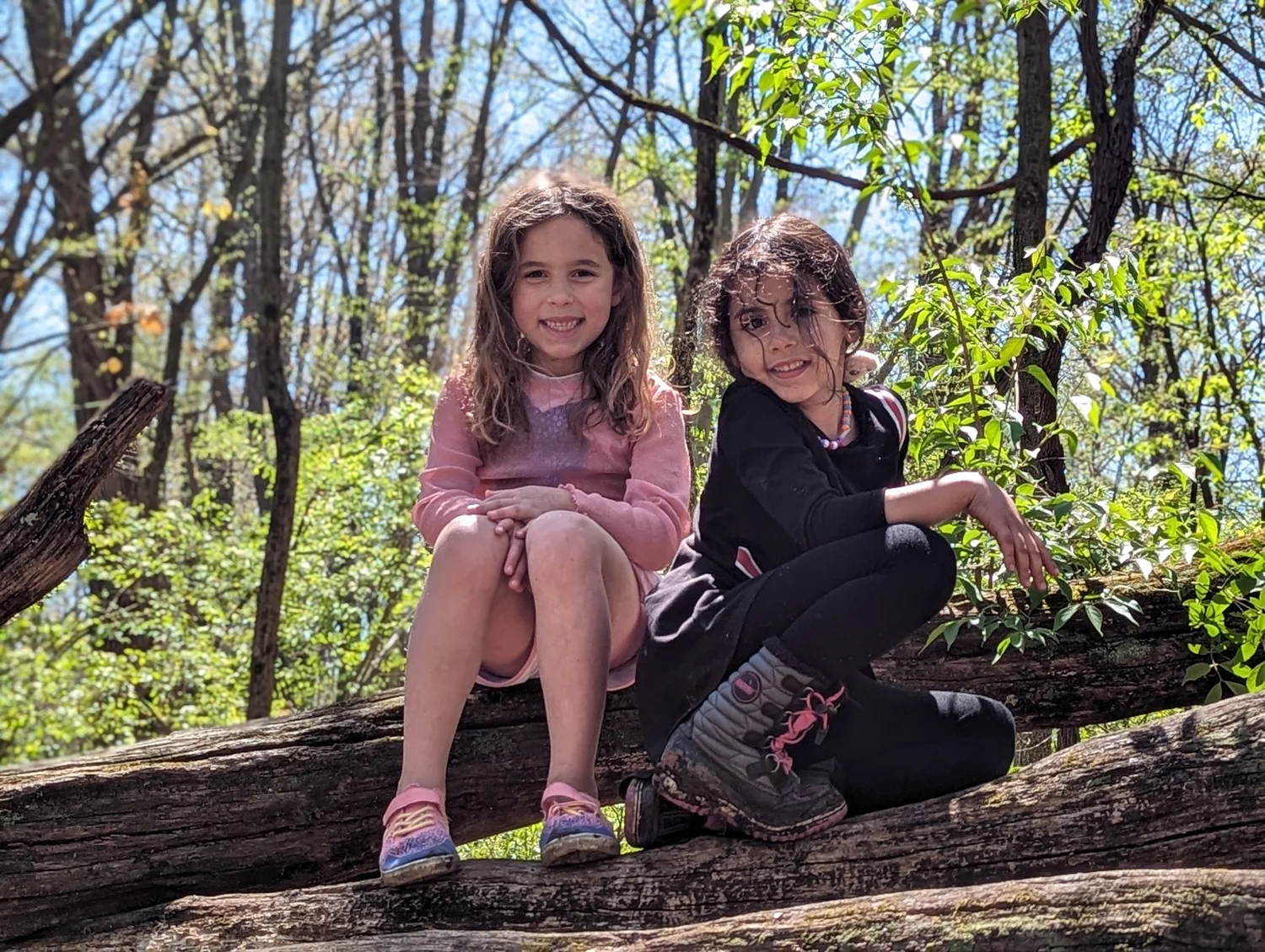
Our youngest learners begin here. Spark is built on a foundation of Montessori practical-life work, Reggio Emilia project-based exploration, Waldorf-inspired loose-parts play, and our signature Hero's Journey character work.
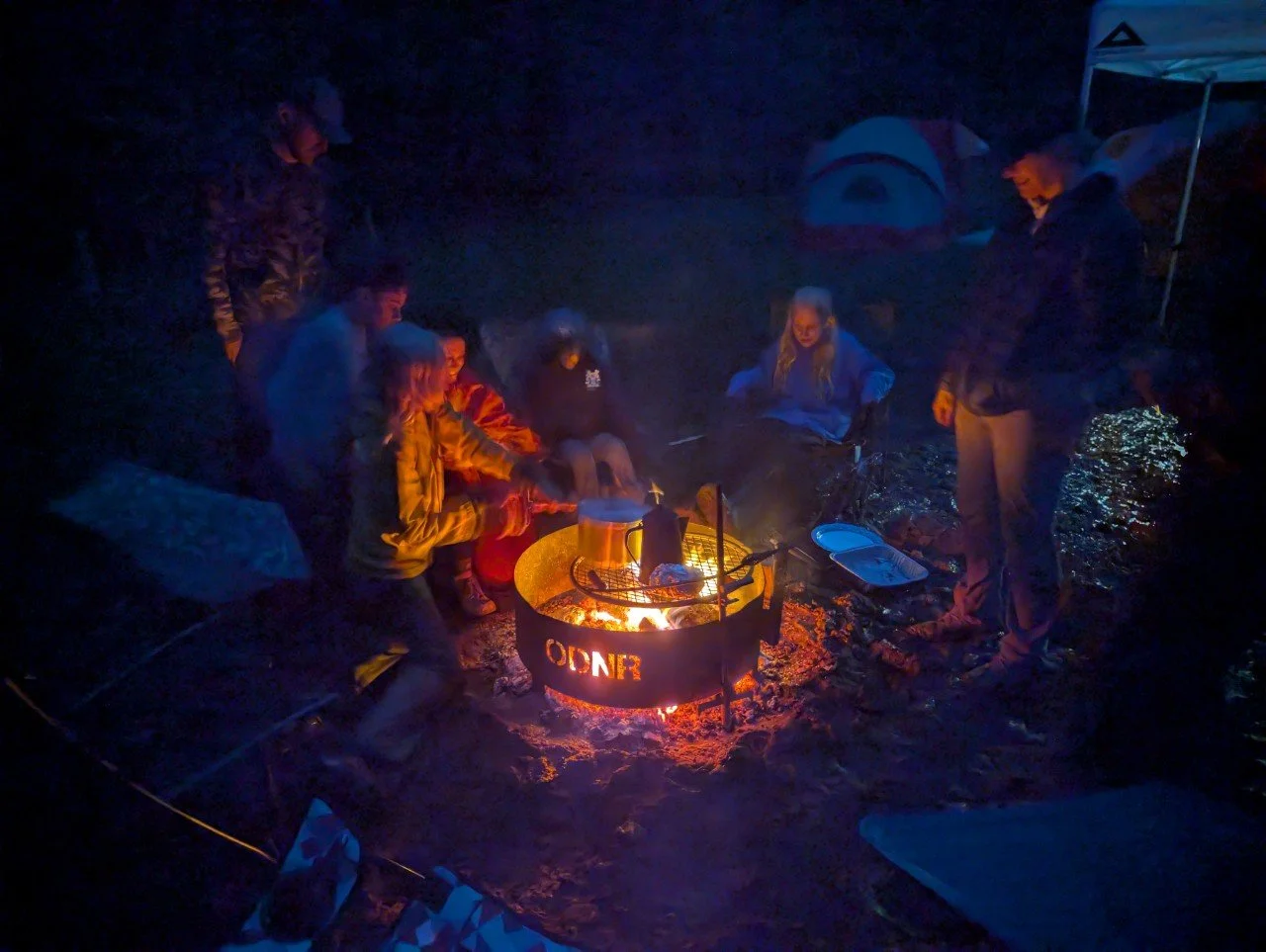
The day is mostly play. Outdoor time is sacred. There are no screens. By the time learners are ready to graduate to Growth, they have the foundation they need to thrive: independence, focus, the ability to hold a conversation, and the comfort of knowing they belong.
Growth Studio.
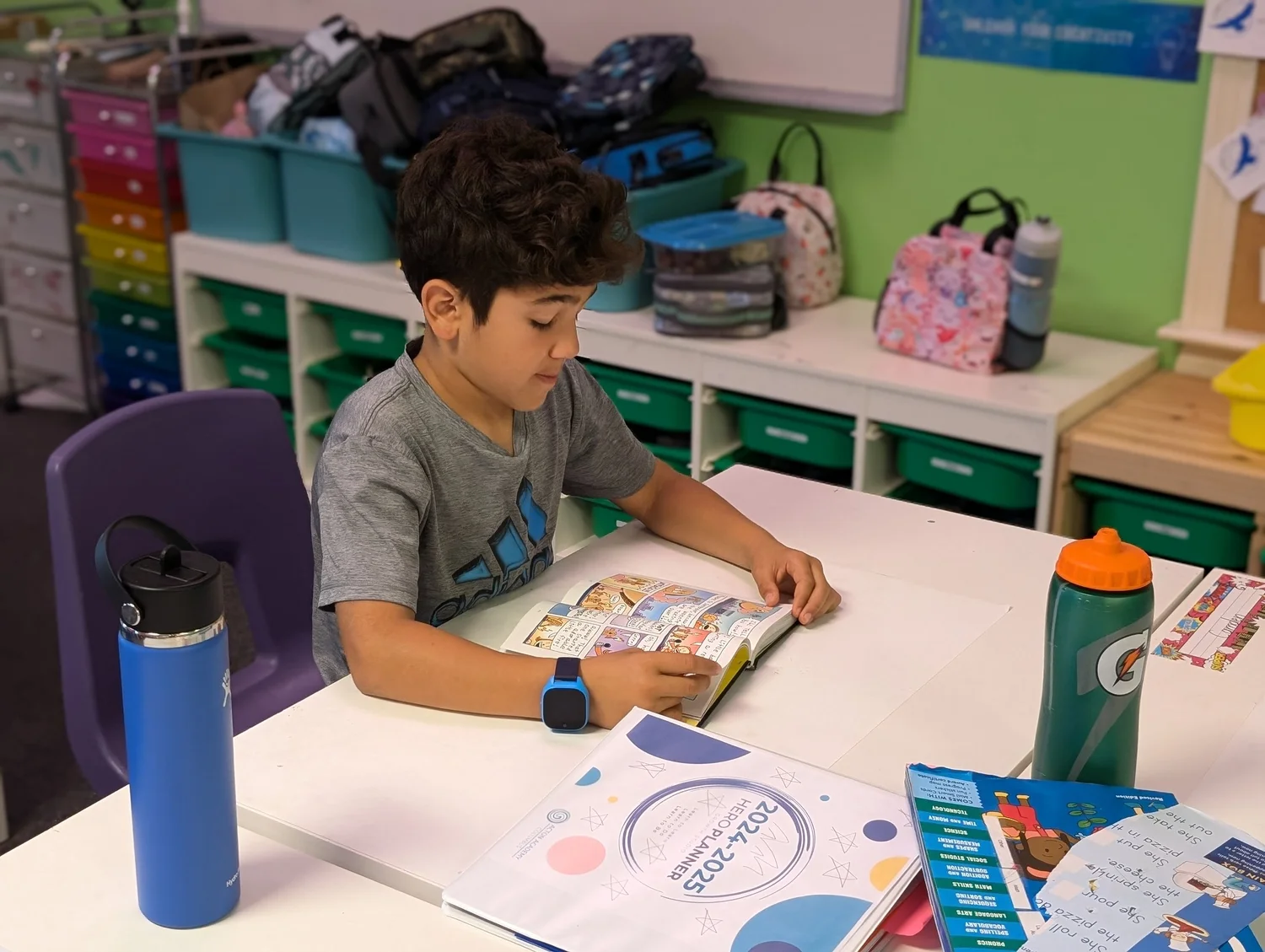
Mastery begins to stick. Learners build core academic skills through self-paced adaptive software while diving into hands-on Quests for the first time — baking, robotics, entrepreneurship, the arts.
Socratic discussions become a daily practice. Studio contracts are written and signed by learners themselves. The Hero's Journey deepens. By the end of Growth, learners can run a studio meeting, give peer feedback, and own a multi-week project from start to finish.
Discovery Studio.
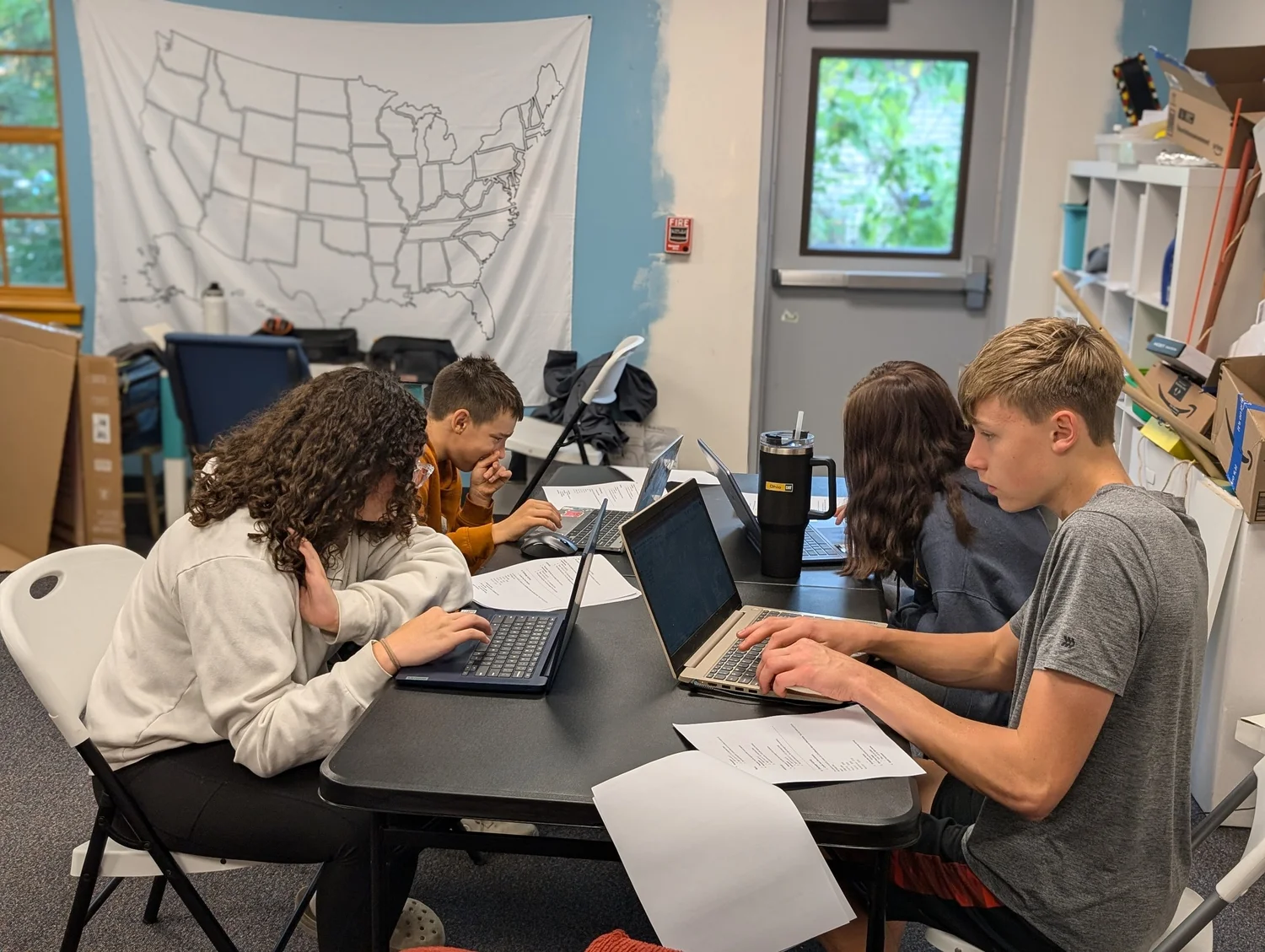
Discovery is where ownership becomes real. Quests get more ambitious. Learners write their own SMART goals, manage their own studios, and begin to discover their passions through deeper exploration.
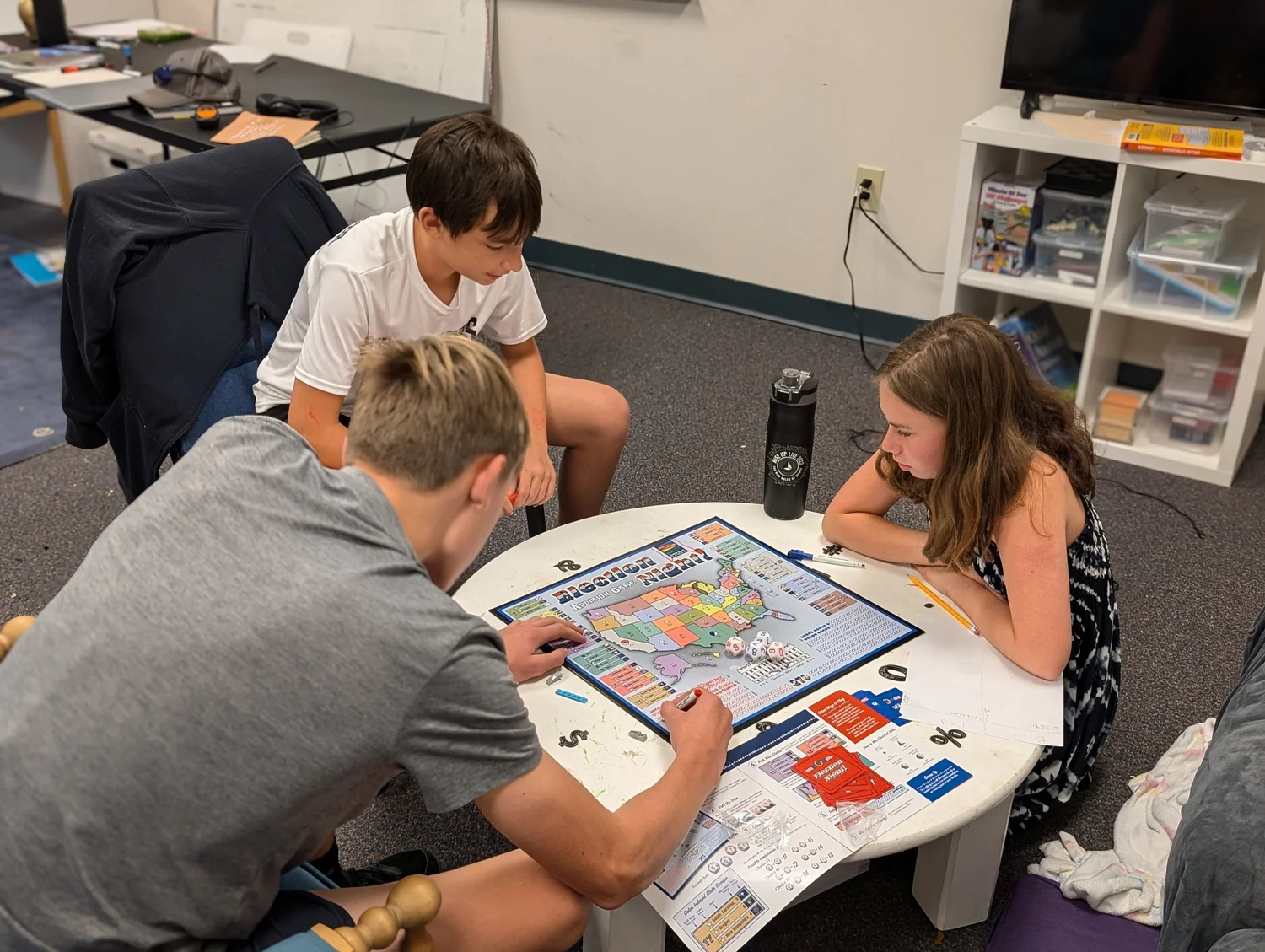
Real-world projects ship to real audiences. Public exhibitions become a regular practice. Discovery learners often start their first businesses, launch their first podcasts, or apprentice with local professionals as part of their Quests.
Adventure Studio.
Apprenticeships. Independent Quests. Increasing autonomy. Adventure prepares learners for life after Acton through internships, deep Quests, and the kind of self-directed work that mirrors what they'll do as young adults.
Adventure learners pursue real apprenticeships in the community — at startups, in studios, with researchers. They read deeply, write extensively, and lead the younger studios. This is where the practice becomes the person.
Launchpad.
Our oldest learners — preparing to launch into the world. Independent projects, real apprenticeships, college and career exploration on their own terms.
Launchpad is the runway. Learners will design their own course of study, work in real industries, and build the body of evidence — projects, portfolios, references — that defines what comes next. Whether that's college, a startup, a gap year, or something we haven't imagined yet, Launchpad will prepare them to choose.
Launchpad opens with our first cohort in the 2027–28 school year. If you have a current Adventure-aged learner growing into Launchpad, let's talk early.
Rhythms of the day.
Each studio has its own rhythm — the pacing varies with age, the freedoms expand as learners grow. But the elements are constant. Here's what every learner does, every day, in every studio.
Morning Launch.
The studio gathers in a circle. A guide poses a Socratic question — sometimes from a story, sometimes from history, sometimes from a learner. Discussion is live, learner-led, sometimes uncomfortable. Always honest.
Core Skills.
Self-paced math, reading, and writing. Each learner works at their level using adaptive software, sets their own goals each week, and tracks their progress. No one moves on until they've truly mastered a concept.
Quest Time.
Whatever the current Quest demands — building, designing, experimenting, researching, presenting. Sustained, hands-on work on a real project that ships to a real audience.
Outdoor Play.
Long unstructured time outside — running, climbing, building forts, playing tag. We protect this fiercely. The research is unambiguous: kids need this.
Studio Maintenance.
Learners clean and care for their own studio. No adults pick up after them. The space is theirs to keep.
Closing Reflection.
Reflection journals. Closing circle. Each learner shares one thing they're proud of and one thing they want to do better tomorrow. And then home. No homework.
The exact cadence — how long each block lasts, how the day is sequenced — varies by studio. The fundamentals are the same in all five.
Quests & real work.
A Quest is a six- to eight-week immersive project that culminates in real work shown to a real audience. Not a worksheet. Not a presentation to parents. Real work — sold, performed, published, shipped.
Past Quests at Acton Columbus have included:
Launch an LLC.
Learners form a real legal business — file the LLC, design a product, build a brand, and sell to actual customers. Profits, losses, and lessons are real.
Machine Learning.
An immersive dive into how machines actually learn. Learners train models, examine bias, and build small AI tools to solve problems they care about.
Detective Science.
Learners become forensic investigators — analyzing fingerprints, blood spatter, handwriting, and chromatography to crack a Quest-long mystery.
Personal Finance.
Build budgets, simulate investments, and make real financial decisions with stakes. By the end, learners run a personal budget that's actually theirs.
Electricity.
From batteries and bulbs to circuits and motors. Learners wire, build, and prototype — and end the Quest with a hands-on engineering exhibition.
Game Design.
Learners ship a fully playable game — designing mechanics, building levels, writing code, and playtesting with real audiences.
"Children come into the world exquisitely designed, and strongly motivated to educate themselves. They don't need to be forced to learn; in fact, coercion undermines their natural desire to learn."— Peter Gray · Free to Learn
The Hero's Journey.
We borrowed the framework from Joseph Campbell. Every learner is on a Hero's Journey — a personal expedition toward a calling that will change the world. We don't push them toward our calling. We help them find their own.
Character isn't a class at Acton. It's the structure of every day. Concretely:
Studio contracts. Learners write the rules of the studio themselves and sign them. When someone breaks a contract, peer accountability handles it — not adults.
360-degree feedback. Every six weeks, learners review each other on a set of character habits. The feedback is honest, structured, and gold for personal growth.
Real responsibility. No adults manage the studio. Learners do — they keep it clean, run their own meetings, mentor younger learners, and resolve their own conflicts.
Daily reflection. Each day ends with reflection — what went well, what didn't, what to do differently tomorrow.
The result: by the time they leave us, learners have a track record of doing hard things. They know what they're capable of, because they've done it.
Tuition, hours, and admissions.
The practical answers, in one place. Where we hold things back, we'll tell you so — and explain why.
School day.
Drop-off 8:00 – 8:30 AM. School ends at 3:00 PM, with flex pickup until 3:30. Schedules vary by studio.
Monday through Friday. We don't offer aftercare — we want learners home with their families.
Year-round.
200 school days per year — considerably more than public school. Our learners get more time, more practice, and more chances to ship real work.
We break for summer, winter, and spring, plus shorter breaks throughout the year. School calendar published annually.
Tuition-supported.
Acton Columbus is fully tuition-supported. Our tuition reflects small studios, highly trained guides, and deep investment in each learner.
Current tuition rates for every studio are published openly here.
A four-step conversation.
Admission is mutual. We're trying to figure out if Acton is right for your family — and you are too. The process is built around real conversation, not paperwork.
Read this kit.
You're doing it. Take the time you need. Mark the parts that resonate and the parts that worry you.
15-min info call.
A conversation with Varun. Bring your hardest questions. We'll cover tuition, fit, and your child specifically.
Trial day.
Your child spends a half- or full-day in the studio. They get to see Acton; we get to see them.
Mutual decision.
If we both feel it's a fit, we make an offer. If either side has doubts, we talk them through.
Open enrollment · Rolling admissions · Limited spots per studio
Is Acton right for your family?
We won't oversell. Acton works extraordinarily well for some children and some families — and not at all for others. Here are the questions worth sitting with before you go further.
For your child
Is your child curious — willing to ask "why" five times in a row?
Is your child willing to struggle a little — to sit with a hard problem instead of needing the answer immediately?
Does your child want autonomy — or do they thrive on structure handed down by adults?
Can your child handle honest feedback from peers, and give it back honestly in return?
For your family
Are you comfortable with a school that can't quote your child a grade?
Do you trust the process when your child says, "I didn't do anything academic today" — and the truth is, they wrote a screenplay, designed a Quest, and led a Socratic discussion?
Are you willing to let your child fail a small, reversible failure — so they can practice recovering from it?
Do you value character over credentials?
If you said yes more often than no — let's keep talking.
The thinkers who shape our work.
A school is a stack of beliefs about what matters. These voices have shaped ours — and form the intellectual backbone of how we educate children every day.
"I am not a teacher, but an awakener."Robert Frost Poet · 1874–1963
"The illiterate of the 21st century will not be those who cannot read and write, but those who cannot learn, unlearn, and relearn."Alvin Toffler Future Shock · 1970
"If the purpose of education is to score well on a test, we've lost sight of the real reason for learning."Richard Feynman Physicist · The Pleasure of Finding Things Out
"Educational success should be measured by how strong your desire is to keep learning."Alfie Kohn The Schools Our Children Deserve
"Agency may be the one most important factor in human happiness and well-being."William Stixrud & Ned Johnson The Self-Driven Child · 2018
"Education is not the filling of a pail, but the lighting of a fire."W. B. Yeats Poet · 1865–1939