
The Skills for 2030 (vs 1990)
The Skills for 2030 vs 1990: Why School Has to Change
If you compare the “skills for 1990” era with the “skills for 2030” era, the shift is clear: we’ve moved from learning to know toward learning to be. Information is everywhere. The advantage is no longer recall—it’s judgment, creativity, resilience, and agency.
- 1990: follow procedures, execute reliably, learn tools.
- 2030: adapt, think critically, collaborate, lead, and create.
- Acton is built around real work that develops human capability, not just content coverage.
These charts aren’t just interesting—they explain why many families feel traditional school is out of sync with the real world.
1990: Learning to Know
The 1990s rewarded students who could build a solid foundation of knowledge and execute reliably. Computers were becoming essential. Procedures mattered. Consistency mattered.
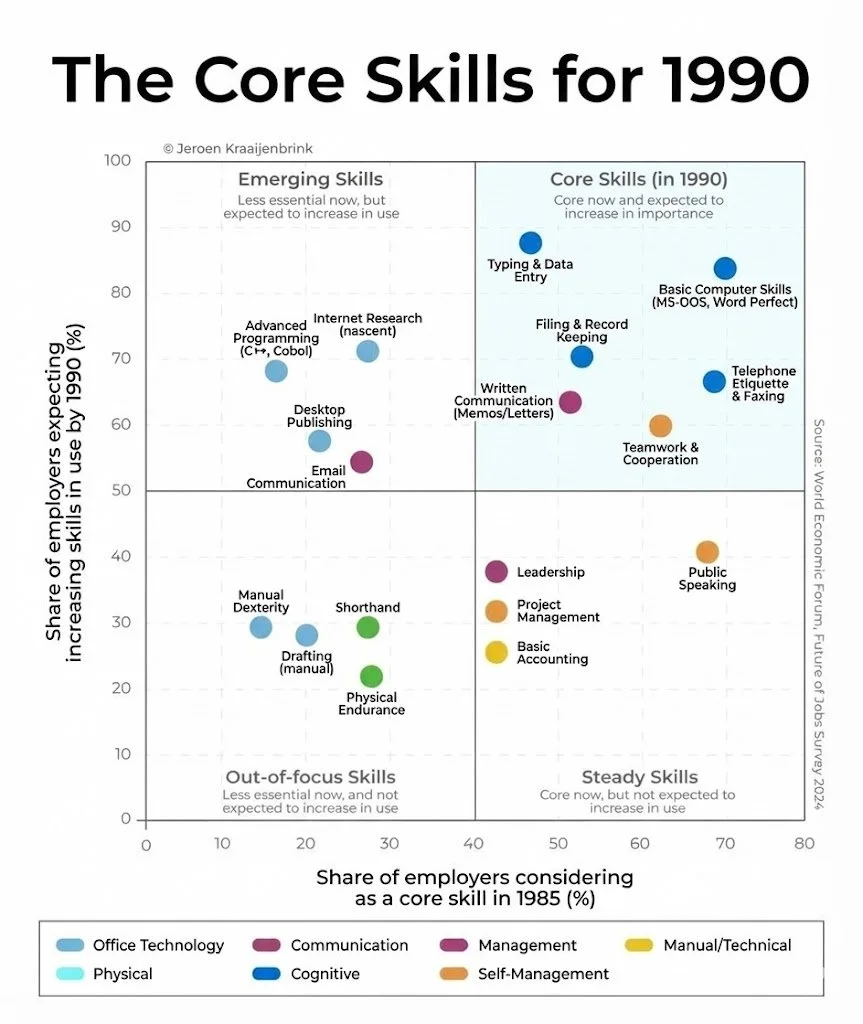
What the era rewarded
- Typing, formatting, and basic computer literacy
- Following instructions and standardized procedures
- Accuracy, consistency, and predictable output
- Memorizing and reproducing information
This model worked in a world of predictable jobs and slower change. School was often designed to maximize consistency and compliance.
If you mastered the “right way” to do things and followed directions well, you were set up to succeed.
But that assumption breaks down when tools change constantly and machines can follow procedures better than people.
2030: Learning to Be
The 2030 chart tells a different story. It’s less about tool proficiency and more about human capability—thinking, adapting, collaborating, and leading in complexity.
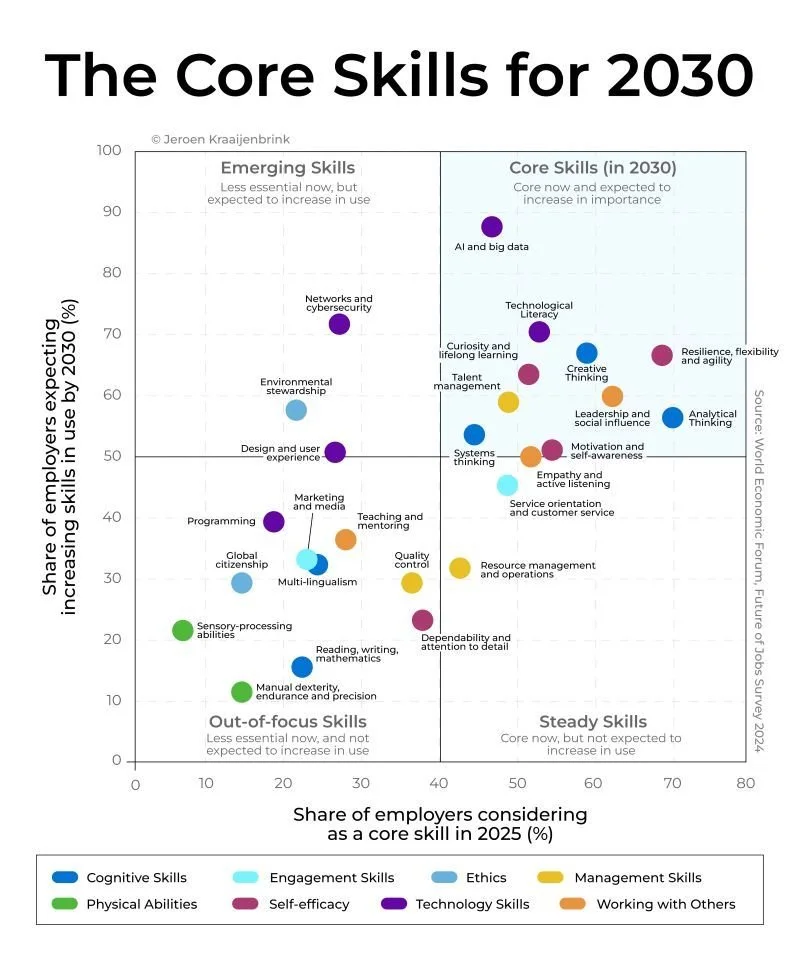
- Analytical thinking and problem-solving
- Creativity and originality
- Resilience, adaptability, and self-management
- Leadership and social influence
- Emotional intelligence
- Curiosity and lifelong learning
The future does not belong to those who can follow instructions fastest. It belongs to those who can think clearly, learn continuously, and lead with character.
In other words: the most valuable skills are the ones that are hardest to automate.
Why Most Schools Struggle to Make the Shift
Many schools are still optimized for the 1990 model—content delivery, compliance, and standardized outcomes. But learning to be is not built through worksheets and lectures.
- Delivering content
- Measuring recall
- Enforcing compliance
- Standardizing outcomes
- Agency and ownership
- Judgment and decision-making
- Leadership and collaboration
- Resilience under pressure
These traits emerge through experience, responsibility, iteration, and reflection— not through pacing guides.
Why Acton Fits the Skills of 2030
Acton Academy wasn’t designed to chase trends. It was designed around a deeper question: what kind of human thrives in a rapidly changing world?
What Acton builds daily
- Agency: learners own their work and outcomes
- Real-world projects: creating, building, presenting
- Iteration: feedback, revision, improvement
- Community: collaboration, conflict resolution, leadership
- Character: responsibility, integrity, perseverance
Then: Learn to know.
Now: Learn to be.
Acton learners practice the habits of mind and character that the 2030 world demands—every day, through real work.
The 2030 chart doesn’t just validate Acton’s approach. It explains why it matters now more than ever.
Want to see what this looks like in real life?
The best way to understand Acton is to experience it. If you’re exploring whether Acton is the right fit for your family, we’d love to help you take the next step.